
The intersection of artificial intelligence and the creative arts has been a flashpoint for debate, but a recent incident involving the world's largest cinema chain proves that the risks extend far beyond ethical arguments.
When AMC Theatres backed out of screening an award-winning AI-generated short film, it sparked an online uproar. However, for those trying to read about the controversy, a much darker, unseen threat was waiting in the wings. This is a story about Hollywood drama, sophisticated cyber warfare, and why the "underserved middle" of Australian small businesses must take their digital architecture seriously.
The handshake refusal heard around the AI world
In February 2026, the Frame Forward AI Animated Film Festival announced its inaugural winner: "Thanksgiving Day", a short film created by Kazakhstani filmmaker Igor Alferov. Using generative tools, Alferov crafted a two-minute intergalactic tale about a bear and a platypus travelling in a dumpster-shaped spaceship (click here to visit the Frameforward.ai website and watch the actual movie).
The prize included a highly coveted two-week national theatrical run across the United States, facilitated by Screenvision Media, a distributor that manages pre-show advertising.
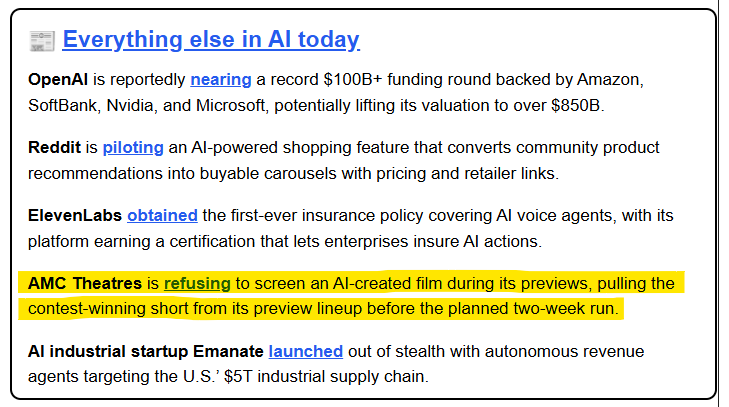
The Rundown AI newsletter highlighting a news link about AMC Theatres that was hijacked by a malicious redirect.
However, the announcement was met with intense social media criticism from artists and audiences who argued that AI-generated productions have no place on commercial cinema screens.
Reacting to the backlash, AMC Theatres - which accounts for a massive portion of Screenvision's network - explicitly opted out. They released a statement clarifying they had no involvement in the film's creation or the initiative, and formally blocked the short from their locations.
It was a significant moment in the ongoing battle over AI in entertainment. But what happened next turned a cultural debate into a serious cybersecurity incident.
When AMC Theatres pulled an AI-created short film due to online backlash, the drama didn't end there. Cybercriminals hijacked the news, turning a viral story into a sophisticated digital trap.
The anatomy of a watering hole attack
As news of the AMC snub spread, a popular daily newsletter, The Rundown AI, covered the story. They included a link directing their readers to a detailed report on The Hollywood Reporter website.
For the average reader, the process should have been seamless: click the link, read the news. Instead, the link triggered a sophisticated, malicious redirect chain.
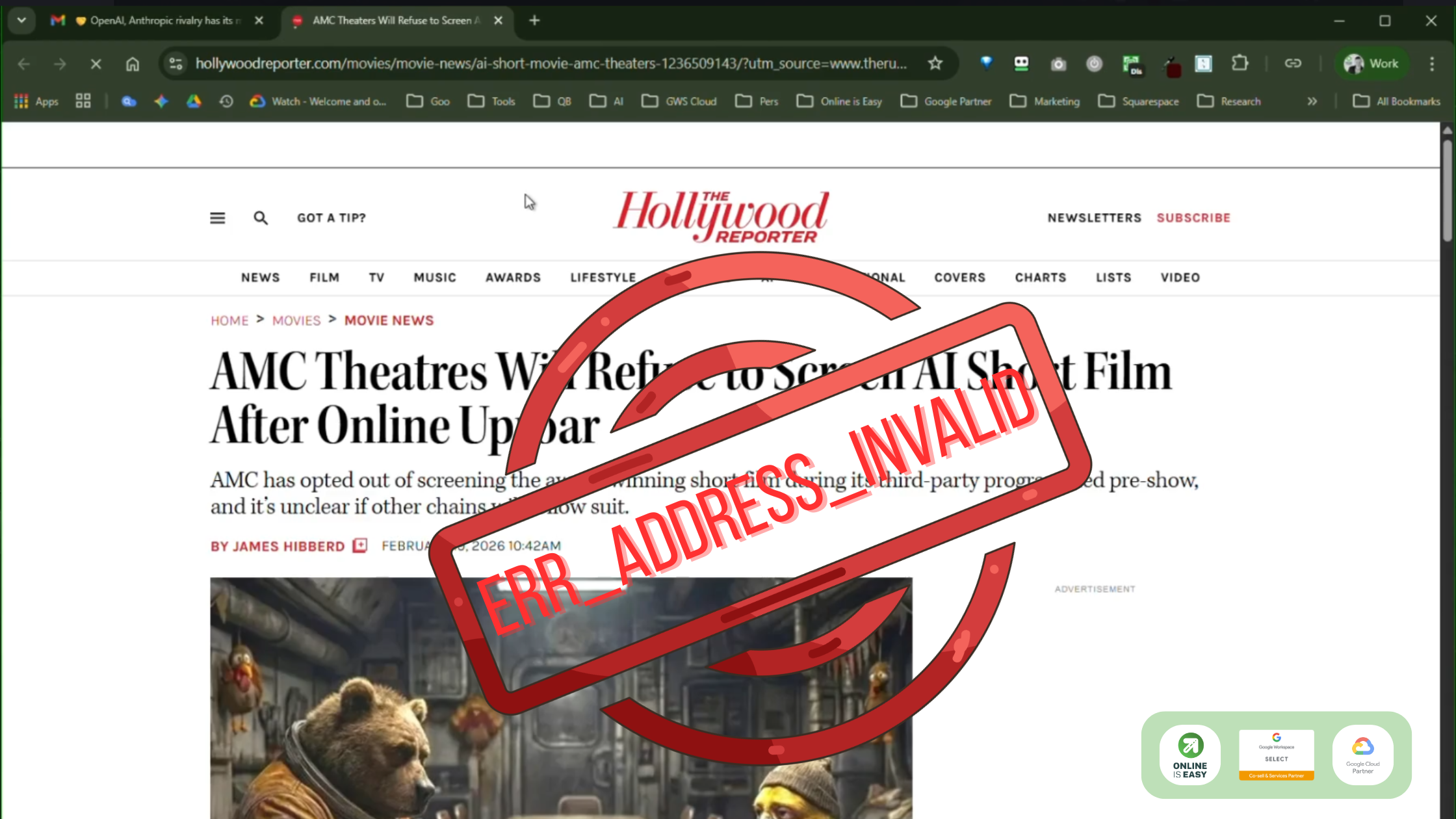
When a user clicked the link, The Hollywood Reporter page loaded for a split second before a pop-up modal appeared, mimicking a legitimate browser alert. It read: "There was a problem loading the page. Please click OK to learn more."
Clicking "OK" redirected the user away from the news site entirely, landing them on a blank page with an ERR_ADDRESS_INVALID message.
As a digital strategy consultancy, we look at the mechanics behind these failures. A forensic analysis of the underlying code revealed that this was not a glitch on AMC or The Hollywood Reporter's end. It was a targeted "Watering Hole Attack".
The final URL contained Base64 encoded parameters. When decoded, the attacker's true logic was exposed. The script was attempting to trick the user into whitelisting a malicious domain (html-load.com) in their browser's security settings.
Because the attack was triggered specifically when users visited the AMC/AI article, it is highly probable that the malicious code was injected via a compromised third-party ad network (malvertising). The attackers knew that a specific demographic - tech professionals and AI enthusiasts - would be flocking to read about this specific controversy. They poisoned the digital watering hole where those users gather.
The real-world cost of fragmented digital platforms
If a highly resourced, global media entity like The Hollywood Reporter can have its traffic hijacked to serve malicious payloads, where does that leave regional Australian small businesses and community organisations?
This incident perfectly illustrates a crisis of digital agency. When we consult with sole traders, freelancers, and not-for-profits across Australia, we often uncover a chaotic web of fragmented platforms. Critical business data is scattered across personal free email accounts, unmanaged hosting providers, and defunct website builders.
When a business owner relies on consumer-grade tools, they lack the cryptographic protocols and spoofing detection required to fend off modern threats. A cybercrime occurs in Australia approximately every seven minutes, and the average financial loss for a small business is $39,000 per incident. You do not need to be a Hollywood studio to be a target; you simply need to be vulnerable.
The Cost of Inaction
The rising average cost per cybercrime incident for Australian small businesses (AUD).
Security Performance Gap
Visualizing the infrastructure deficit between DIY setups and a managed Digital Engine Room.
Securing your digital engine room
The traditional approach of registering a domain and building a DIY website is no longer sufficient. To survive and thrive in an AI-mediated internet, businesses must adopt an enterprise mindset without absorbing enterprise costs.
At Online is Easy, we advocate for a philosophy built on what we call the Five Pillars of Digital Strategy. The first two are critical for mitigating the exact type of chaos seen in the AMC hack:
1. Domain sovereignty:
You must hold the ultimate administrative keys to your Domain Name System (DNS) records. Far too many businesses are held hostage by former developers who registered assets under their own credentials. Without absolute domain sovereignty, you cannot configure the complex email authentication protocols (like DMARC, SPF, and DKIM) required to prevent bad actors from spoofing your identity.
2. The digital engine room:
Relying on a @hotmail.com or free @gmail.com address is a critical vulnerability. You must migrate to an enterprise-grade cloud environment, such as Google Workspace. This isn't just about looking professional; it is about centralising your data into a secure, machine-readable database protected by mandatory multi-factor authentication and advanced threat detection. A clean, secure digital workspace is the absolute prerequisite for safely leveraging AI tools in your business.
Take control of your digital business.

The AMC AI film controversy is a fascinating story about the future of art, but the malicious attack hidden within the news cycle is a stark warning about the present state of digital security.
For business, volunteer groups, or personal home use, no one can afford to abdicate control of their digital infrastructures to chance or fragmented, outdated platforms. You need a unified strategy that empowers you to delegate the technical heavy lifting while retaining absolute ownership of your business assets.
If you are ready to professionalise your online presence, protect your data, and confidently navigate the new digital landscape, we are here to help.
Connect with Anthony for a free and confidential Discovery Call to discuss how we can secure your digital engine room today.
Frequently asked questions
-
Using a professional Google Workspace account provides your business with enterprise-grade security, mandatory multi-factor authentication, and advanced phishing protection. It prevents your business from falling victim to common cybercrimes like Business Email Compromise, which frequently target unsecured and free email accounts.
-
Domain Sovereignty means you, the business owner, legally own and hold the ultimate administrative access to your domain name and DNS records. It prevents the "asset hostage" scenario where a third-party developer locks you out of your own website and email infrastructure.
-
Yes. Platforms like Google Workspace offer heavily discounted or free tiers for validated not-for-profit organisations. A digital strategy consultant can help you navigate the setup, ensuring your volunteer committee inherits a secure, consolidated system rather than a messy trail of lost passwords, emails, and files.
-
Platform fragmentation occurs when your business data is scattered across multiple unlinked systems -- such as personal emails, random Dropbox folders, and outdated website builders. This causes operational paralysis, increases security risks, and creates massive "technostress" for your team.
-
A secure website should have a valid SSL certificate, be built on a platform that handles automated security patching (like Squarespace), and feature properly configured legal and accessibility compliance pages. If you are reliant on manually updating plugins on an old framework, your site is highly vulnerable.
-
AI search engines use Answer Engine Optimisation (AEO) to read and synthesise your website data to answer user questions directly. If your website is not technically structured with pristine semantic data, AI assistants will bypass your business and recommend your competitors instead.
-
Vibe Coding is a modern approach where non-traditional developers use natural language and visual builders to configure software, rather than writing raw code. Platforms like Squarespace embrace this, allowing business owners to easily update their sites without relying on expensive, ongoing agency retainers.
-
Regional businesses can compete by establishing a robust "Visibility Architecture". This involves claiming a localised domain name, optimising Google Business Profiles, and ensuring their website is built with structured data that search engines trust, allowing them to capture highly targeted local traffic.
-
The first step is a digital audit and consolidation. By partnering with a certified consultant, you can migrate your scattered data into a single, secure "Digital Engine Room" (like Google Workspace), regain control of your domain, and establish a clear, manageable strategy for growth.
References & Sources:
https://decrypt.co/358750/amc-theatres-blocks-ai-short-film-from-screening-in-pre-show-advertising
https://www.cartoonbrew.com/distribution/amc-theaters-ai-short-thanksgiving-day-258983.html
https://gigazine.net/gsc_news/en/20260220-amc-theatres-wont-screen-ai-film/
https://cloud.google.com/find-a-partner/partner/online-is-easy
https://www.onlineiseasy.com.au/news/business-email-compromise
Note: at the time of publishing this blog, the The Hollywood Reporter website still has a malicious redirect, so we haven’t included that link.

Anthony Mayer, Digital Strategy Consultant & Founder, Online is Easy
Anthony Mayer established Online is Easy in 2014 to serve as an expert mentor and guide for Australian small businesses, community groups, and NFPs. Based in Gippsland, Victoria, he specialises in bringing human capability and emerging technology together through a practical, hands-on approach across Australia.
As a Google Cloud Partner, Authorised Google Workspace Reseller, and Squarespace Expert, Anthony ensures your business "engine room" is built to industry best-practice standards. He is also an Authorised MembershipWorks Developer and Squarespace Trainer, helping organisations streamline their digital workflows with clarity and good humour.
A pioneer in cloud-based workspaces, Anthony helps remote, rural and regional clients leverage AI tools, including Gemini for Google Workspace, Workspace Studio, Gemini App, and AI Studio to automate, enhance productivity, and scale operations. He combines over a decade of strategic leadership with technical expertise to help you secure your digital foundation and lead with confidence in the AI era.
